Publications

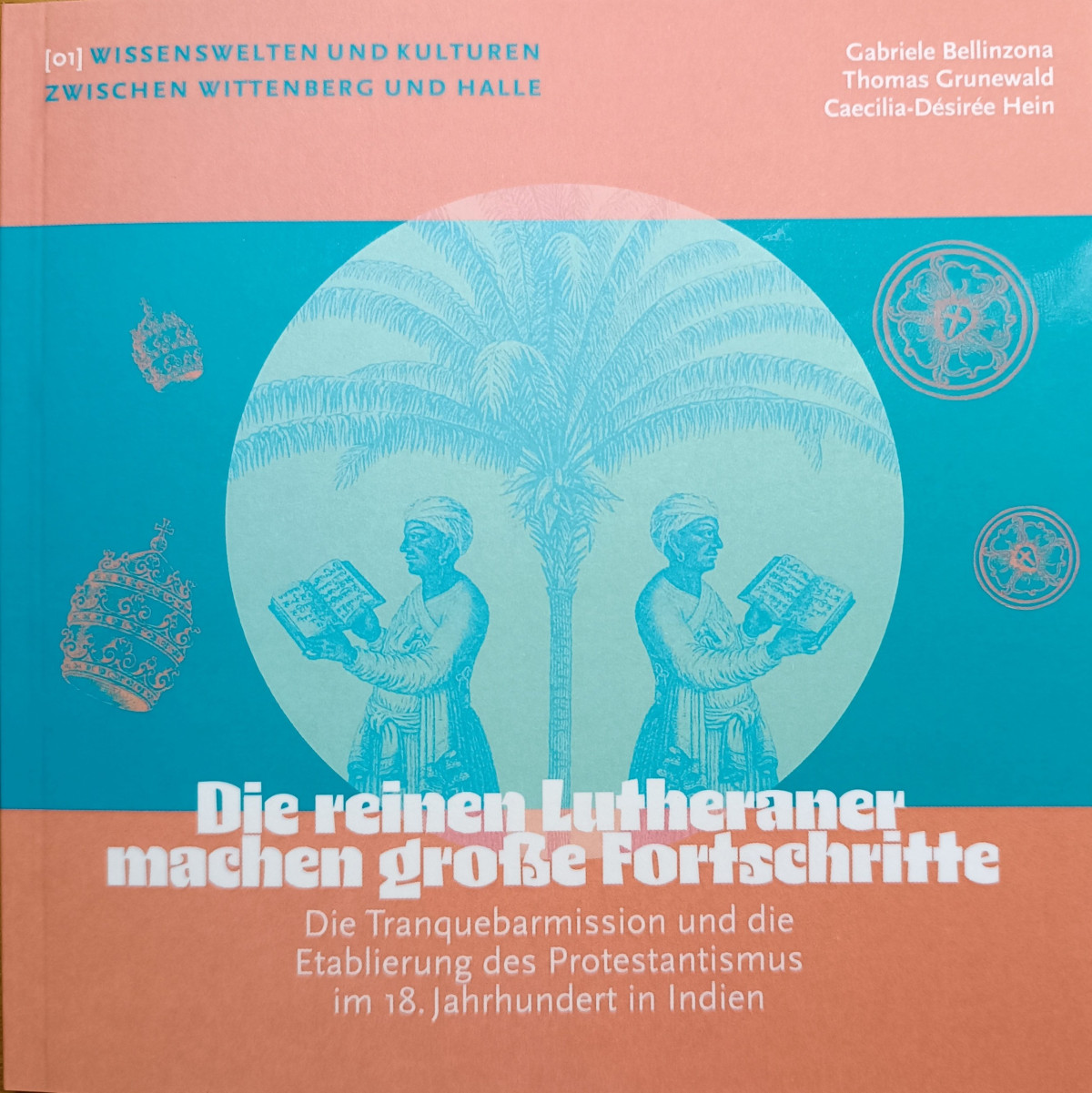
The Pure Lutherans are making great strides – The Tranquebar Mission and the establishment of Protestantism in 18th-century India

In 1706, the first Lutheran mission in India was founded in Tharangambadi (also known as Tranquebar) by missionaries influenced by Pietism. They came into competition with the Catholic missionaries, who had been active in Asia since the 16th century. We are taking this as an opportunity to examine the development of the Christian missionary endeavour of the two denominations, with particular regard to the situation in India. In cooperation with the Francke Foundations in Halle, the Reformation History Research Library is exhibiting early printed works that address the topic of mission from a historical perspective, as well as Tamil palm-leaf manuscripts held by the Francke Foundations. These outstanding collections, which have never before been displayed together in this way, offer illuminating insights into the relationship between the Christian denominations in a non-European context.

Translated with DeepL.com (free version)

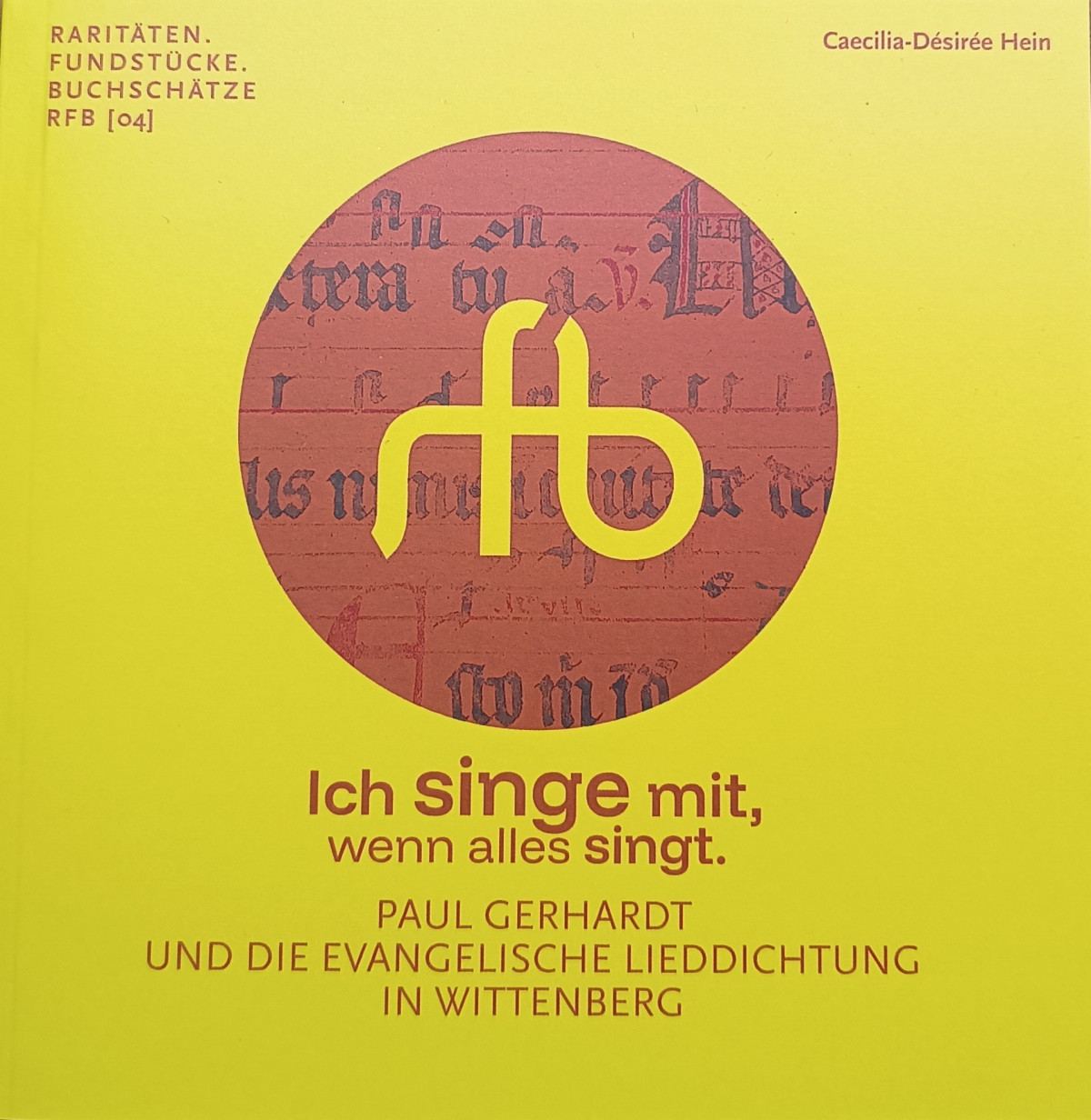
I sing along when everyone else is singing. Paul Gerhardt and Protestant hymn-writing in Wittenberg

To mark the 350th anniversary of his death, the focus is on Paul Gerhardt, arguably the most famous Protestant hymn writer alongside Martin Luther. His hymns continue to shape the repertoire of Protestant and Catholic hymnals to this day.
We are taking this as an opportunity to examine the development of Protestant hymnody in and around Wittenberg. Which hymnals were printed during the Reformation? How was music learnt, both in theory and in practice? Where was singing practised outside of church services? Alongside early printed editions, the exhibition also offers an insight into the extensive collection of hymnals held at the RFB.

WeltWissen Wittenberg - Wittenberger WissensWelten. Georg Joachim Rheticus und die astronomische Forschung in Wittenberg (World knowledge of Wittenberg – Wittenberg’s worlds of knowledge. Georg Joachim Rheticus and astronomical research in Wittenberg)

To mark the 450th anniversary of the death of Georg Joachim Rheticus on 4 December 1574, the RFB has developed a cabinet exhibition entitled World knowledge of Wittenberg – Wittenberg’s worlds of knowledge. The exhibition will be on display in the Research Library from 7 January to 25 March 2025.
An exhibition booklet has been published to accompany it.

The accompanying booklet is available for a nominal fee of € 4.99 in the Research Library for Reformation Studies.

Personen, Wissen, Karrieren. Bildung und Professionalisierung zwischen Stadt und Hof (1470–1540/50) (People, knowledge, careers. Education and professionalisation between city and court (1470–1540/50)

The anthology looks at the decades around 1500, which were characterised by political consolidation and changed concepts of rule, by economic boom, new technologies and cultural transformation, from a specific historical-epistemological perspective. The papers address the role of the city and court in production and organisation, the mediation and transfer of knowledge, as well as for the careers of the bearers of knowledge.

This view, accentuated by personal history, meets different areas of knowledge: alongside university scholars, it deals as well with specialists and practitioners whose profession was only partially determined by academic education or not at all. Learned councillors and officials in the services of princes and counts, doctors, astrologers and cartographers, heralds and craftsmen, miners and merchants are all taken into account.

The anthology emerged from a conference concept that was planned for 2020 in Lutherstadt Wittenberg as a collaboration between the Research Library for Reformation Studies and the research project Residenzstädte im Alten Reich (1300-1800) (Residence cities in the old kingdom (1300-1800)) of the Lower Saxony Academy of Sciences and Humanities in Göttingen and the Swiss Academy of Humanities and Social Sciences’ Repertorium Academicum Germanicum (RAG) project. Unfortunately, the COVID-19 pandemic thwarted these plans. However, the great commitment of the participants made it possible to publish the planned contributions in an anthology, which has now been published by Jan Thorbecke Verlag. The book can be purchased from bookstores.

Die Engel bedenken sich. Heidrun Feistner - Skulpturen The angels contemplate) Heidrun Feistner - Sculptures)

From 17 April to 16 July 2023, the Forum Schlosskirche will host the exhibition “Die Engel bedenken sich. Heidrun Feistner - Sculptures”. An accompanying catalogue has been published.

The catalogue comprises 120 pages and presents all the works shown in the exhibition in a way that is as sophisticated as it is appealing. Many of Heidrun Feistner’s sculptures are closely related to poems, which have also been included. In addition, the catalogue contains selected prose texts for the understanding of the work.

Heidrun Feistner usually creates her works from stone. Casts are also made of some works. She describes the process of creation as the gentle exposure of the forms hidden in this material, very similar to an archaeological approach. But it is about more than just discovering hidden forms. It is also about making the genesis of the form visible, letting the stone become the narrator of a story.

The catalogue was made possible by a generous grant from the Evangelical Wittenberg Foundation. The volume is available at the price of € 15.00 in the Research Library for Reformation Studies.